Decision Meetings Without a Deck: Forty Tests in One Quarter
Forty decision meetings ran without slides, and the median time to a decision fell from 46 minutes to 19. The meetings were not shorter because fewer people spoke. They were shorter because the discussion started from a written recommendation rather than from a title slide.
The organisation was a payments company with 90 engineers and a weekly architecture forum. Decisions ranged from library choices to service boundaries, and the forum had a reputation for long sessions with unclear endings.
What the deck did
A deck sequences information, and sequencing means the audience receives context before the question. That is useful for a briefing and expensive for a decision, because the first fifteen minutes are spent establishing what the room is being asked to approve.
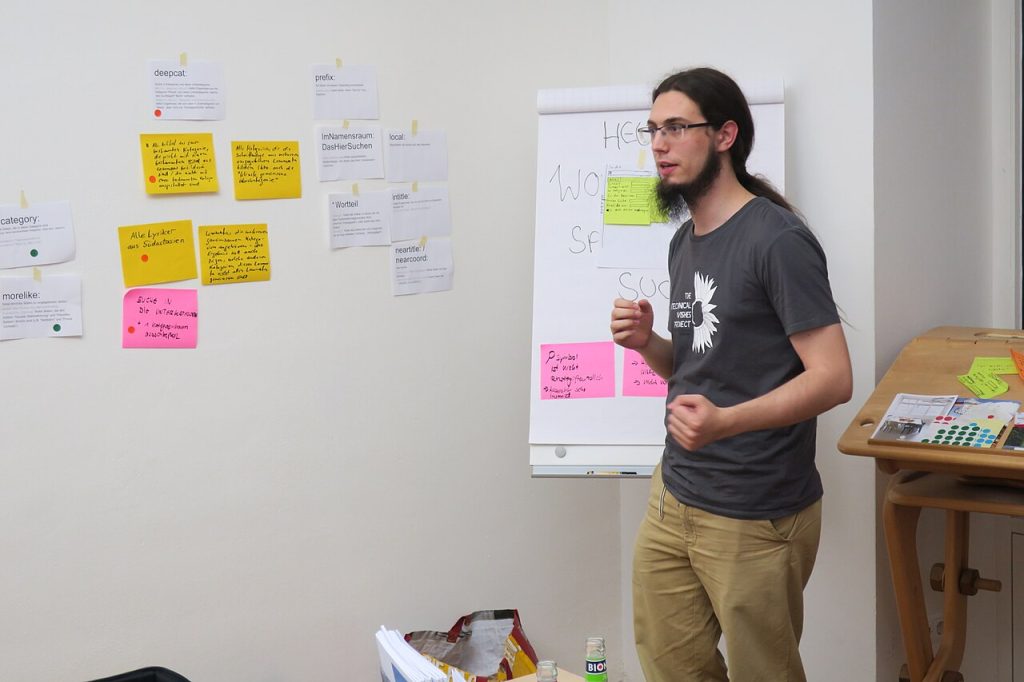
The average deck in the sample was 14 slides and was presented in 18 minutes. Questions started at minute 22 and the decision usually arrived at minute 46.
The one-page replacement
Each decision was written on one page: the decision, the recommendation, two alternatives with reasons for rejection, the cost, and what would make the team revisit it. The page was circulated 48 hours before the meeting and read in silence for the first five minutes.
Reading in silence at the start of a meeting feels wasteful and is the opposite. Five minutes of silence replaced eighteen minutes of presentation.
The first ten
The first ten meetings averaged 24 minutes, with two running to 50 because the recommendation was unclear. In both cases the ambiguity was visible on the page and had not been resolved before circulating it, which the authors described as a drafting problem rather than a format problem.
Decisions were made in all ten sessions, which had not been true of the deck era.
Where the format struggled
Two kinds of decision did not fit. Anything requiring a diagram, such as a service topology, was hard to compress to one page, and the team allowed an appendix of up to three images. Anything requiring a demonstration, such as a developer tool, was moved out of the forum entirely.
The appendix rule was abused twice, with appendices of nine and eleven images. Both were sent back.
The role of the decider
Without a presentation, the decider reads rather than listens, which changed what they asked. Questions in the no-deck meetings were more often about the rejected alternatives than about the recommendation, because the recommendation had already been read.
That is a different quality of question and it is the main argument the participants gave for keeping the format.
The silent five minutes
Three people said the silence felt confrontational at first, as though the room was being tested. The team kept it and added a single sentence at the top of the page saying the meeting begins with reading, which removed the discomfort without removing the practice.
Latecomers broke the silence twice and the meeting restarted the reading, which happened only twice before punctuality improved.
One quarter on
Median time to decision fell from 46 minutes to 19. The share of meetings ending without a decision fell from 28 percent to 6 percent. Deck production time, which had been about three hours per decision, fell to roughly 90 minutes of writing.
The appendix that crept back
By the twentieth meeting, three pages had quietly become a page plus two diagrams plus a table, which is a deck with the covers off. The team imposed a physical check: anything over one page and three images was returned without discussion.
The check ran for six weeks and returned four submissions. After that the format held without enforcement, which is how most rules end.
Forty-six minutes once went into presenting a case that could have been read in five. Nineteen minutes now, with the reading done first and the argument starting where the recommendation ends.